


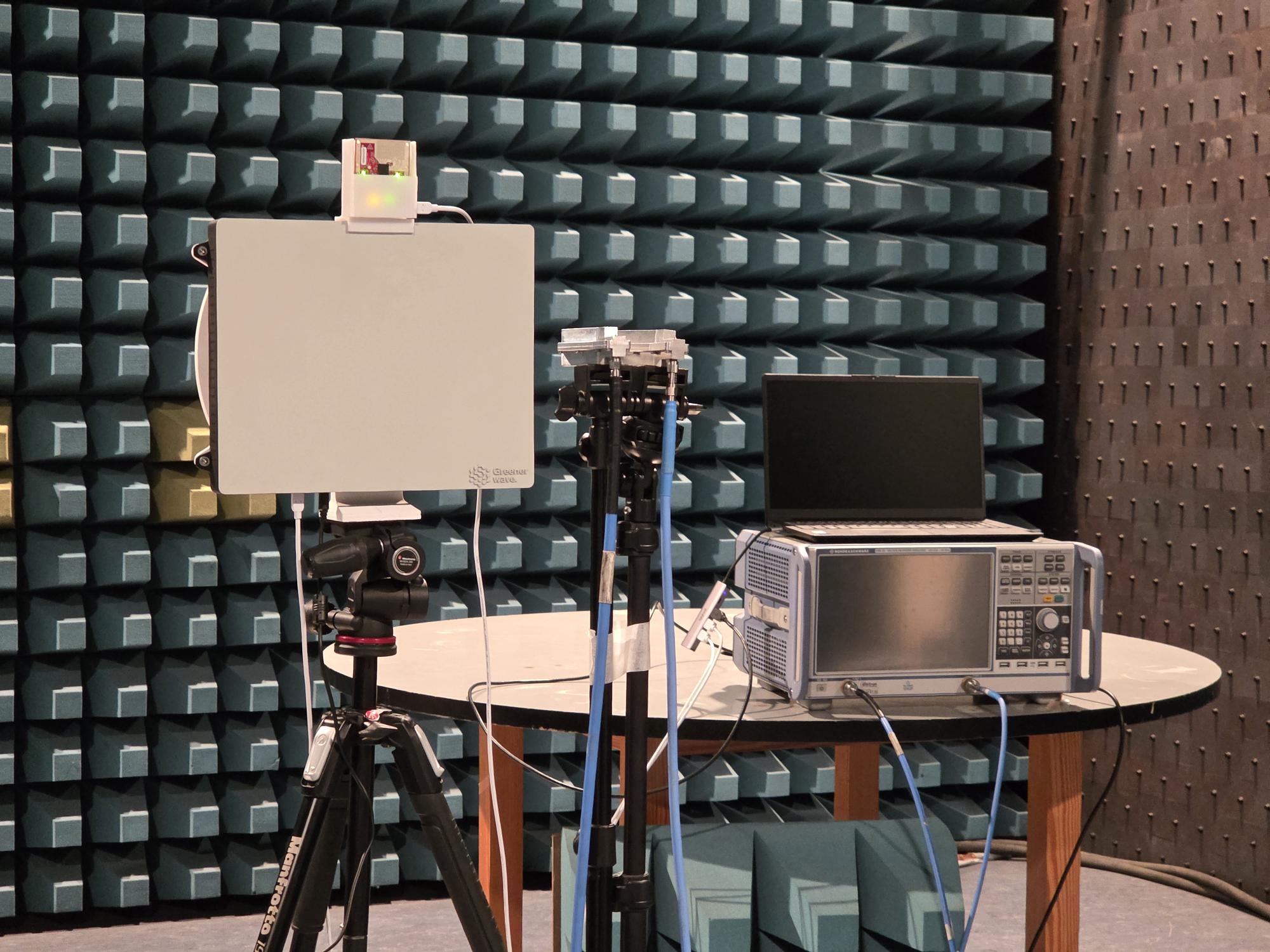
Wireless communications pay a fundamental role in our society nowadays. The increasing demand of data everywhere and at every time has led to the implementation of more sophisticated mobile communications systems. The recent standardization of Fifth-Generation (5G) systems is applied not only to typical communications environments, but also to novel scenarios and use cases not considered before, and is creating new business models and acting as a revulsive in the Information Technologies sector. Recently, the research community and the standardization bodies have started to discuss what the Sixth-Generation (6G) of wireless communications should be. Again, it is envisioned that 6G mobile communications revolution the communication sector by proposing novel communication paradigms, novel uses cases to connect not only people or devices -as in 5G- but providing the network with intelligence able to identify, localize or sense their environment. Hence, the first proposals for 6G enabling technologies are over the table, and it is expected that really disruptive concepts are incorporated in future to 6G. One of the hot topics for 6G enablers are smart surfaces able to overcome the barriers of the radio channel at millimeter-wave (30GHz) and ultra high frequencies (above 60 GHz) by adapting their electromagnetic behaviour dynamically.
In this context, COREMAT-6G aims at developing smart surfaces from an integral perspective, addressing from the design of the surface materials, their electromagnetic optimization, their influence on channel performance, their use for sensing and localization, as well as their management from the radio access network (RAN). The novelty of COREMAT-6G lays on the use of novel materials capable of change their complex dielectric properties by adjusting their initial composition in combination with external control signals. These materials are in addition non-metallic, of lower cost and recyclable, so improving the sustainability of the next generation networks deployment. All these concepts imply an interdisciplinary approach which accounts with highly specialised insight from different players, that will play a key role on the development, manufacturing and commercialisation of these devices as 6G technology enablers. Therefore, this project envisions to involve the participation of both the scientific community in academia and research departments at companies, in order to succeed in the development of smart surfaces and their application.
Concretely, COREMAT 6G Subproject A – RIS Implementation will be focused on the research and development of both metallic and non-metallic RIS panels using novel dielectric materials in order to compare their performance. To achieve this goal, the engineering and design of both the materials of the panel as well as the design and optimization of the elements of the panel from the electromagnetic perspective will be also addressed. Besides, the physical implementation of the surface is also envisioned in the subproject, leading to a final manufactured prototype ready to be used in future applications in 6G networks (subproject B) or to operate as an element of the network in future 6G systems (subproject C).
Concretely, COREMAT-6G Subproject B – RIS Integration on 6G RAN will be devote to the research and evaluation of the role of RIS on future 6G networks. On the one hand, the subproject will be focused on the modelling of the radio channel either in absence and in presence of RIS panels. The aim of this is to evaluate the final performance of RIS on channel performance and explore the advantage of using these surfaces to improve the channel behaviour on 6G transmissions under different scenarios. On the other hand, the subproject will target the development of novel sensing algorithms for location, tracking, and optimal beamforming in 6G by exploiting the use of RIS devices. To accomplish this, sensing algorithms will be based on radar techniques leading to a much more complete integration into future 6G standards. Besides,not only the development and testing of sensing algorithms will be considered in the project, but also, prototyping on RIS panels for real performance evaluation.
Due to the highly innovative and interdisciplinary approach of the project, it is expected that COREMAT-6G contributes to create a novel ecosystem on the Spanish business sector. Only few international projects are tackling so far the use of smart surfaces in 6G communications, and none of them account with Spanish partners -neither on research centres nor in companies- in their consortiums. Thus, COREMAT-6G is the first initiative in Spain related to these future 6G enablers, so it will definitely contribute to put Spain in a leading position in 6G technology, boosting the presence of research centres and companies in future Horizon Europe calls. In fact, COREMAT-6G is perfectly aligned with the strategic lines established by the Strategic Research and Innovation Agenda (SRIA) 2020-21 from Networld2020 and the draft programme for Smart Network and Services (SNS) of the 5G Infrastructure Association (5G-IA) for the European Commission. These programmes envision the incorporation of smart surfaces on novel radio technologies for 6G and their research and development on radical novel technologies.
At national level, COREMAT-6G will clearly strength the R&D public system as well as the creation and evolution of companies -especially SMEs- of the sector of radiocommunications. This will lead alongside to the creation of new jobs in telecommunications, with high added value due to its high specialization in many areas.
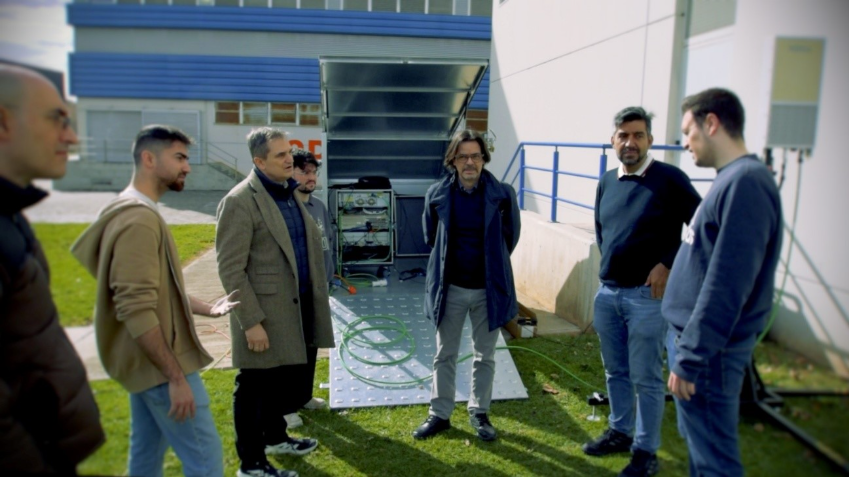
IMPACT
Spain has been one of the leading countries in defining the 5G standard, through the participation of many of the Spanish public research entities and companies in the Horizon 2020 program and the 5G-PPP projects. However, all this knowledge has hardly been transferred to boost the industrial ecosystem, having companies that could had incorporated the results of these projects into their current strategy and products. In this project, we will work with Spanish companies that can develop cutting-edge research in aspects related to mobile communications in general, and reconfigurable intelligent surfaces (RIS) in particular, and that at the end of it will have acquired a know-how and capacities to produce technology that in the mid and long-term scope will be widely used in 5G + and 6G networks deployment. Specifically, we will have companies capable of manufacturing the RIS panels because they are currently manufacturers of antennas and microelectronics; also with companies that work on signal processing algorithms in the analog domain, the Doppler domain and in radar, to produce the reconfiguration software for the RIS; with companies that will be able to research, design, and prototype communication interfaces and devices from the RIS to the network control plane; and with operators and mobile network management companies, who will investigate in the integration of the RIS in their networks, as well as on the algorithms for managing and optimizing the operation of the RAN based on the existence and deployment of these RIS.
Therefore, the impact that this project may have on the Spanish industrial ecosystem is to reinforce the capacities of our SMEs and enterprises in the Radiocommunications sector, and provide engineering companies, operators and device manufacturers with cutting-edge 6G technology. If, as expected, the RIS surfaces end up generalizing as a kind of passive repeaters in the radio access network, the number of elements to be manufactured and managed would be large, at least of the order of magnitude of the current number of nodes and femtocells, so the market that we can expect both nationally and internationally for this type of product is substantial. Although it is difficult to specify numerically the direct impact of this project on employment, it is not risky to venture that at least in each of the participating companies a new product line will be generated, and therefore the number of new employees related to it can be substantial. If, in addition to that, companies manage to position themselves ahead of the rest of their competitors in other countries, we will increase the competitiveness of our industrial ecosystem for the future deployment of 6G networks. As mentioned, the five participating companies respond to the different profiles of the companies that usually intervene in the production and deployment of elements of the radio access network, from the antenna manufacturer to the operator.
Indirectly, the positioning of this consortium on this 6G topic is somewhat ahead of the calls for the Horizon Europe Framework program and the SNS platform. This will allow the companies and the public entity that develop this project to anticipate and lead future projects with European partners, based on their experience, probably just started in this project.
On the other hand, when addressing in this project the definition and prototyping of the RIS surfaces based on new materials, in contrast of those based on a classic approach as patch antenna arrays, it is foreseeable that one or more patents will be generated from the project results. To our knowledge, neither the concept of integrating these elements in the control plane and in the access, network is at the moment being addressed in any other initiative at the European level, so the project anticipates that definition and that scenario of integration of the RIS into the RAN. As the subject of the project is very incipient, starting at a very low TRL, and addressing a technology that will not be commercial in the mid-term, it is feasible to expect that several PhDs will emerge from this project, even developed at the university or in collaboration with participating companies, which could host industrial doctorates.
- Subcontracted companies: Ayscom, Orange Spain, Distron, Gradiant, Nokia.
- This project is part of grants TSI-063000-2021-118, TSI-063000-2021-119, and TSI-063000-2021-120, funded by the Ministry of Economic Affairs and Digital Transformation and the European Union – EU Recovery Plan, within the framework of the Recovery, Transformation and Resilience Plan and the Recovery and Resilience Facility.
